



Attack on the Pentagon


Rolodexes were used to store and organize contact information such as names, phone numbers, and addresses. This particular rolodex was rendered nearly unrecognizable by fire damage when it was discovered still sitting on a desk in a Pentagon office.
Loan, Center of Military History, Museum Division, U.S. Army

When American Airlines Flight 77 crashed just outside of the Pentagon and slid nearly halfway through it, the first two floors of the five-story building were completely destroyed. The heavily damaged upper floors initially held out, but with the intense fire raging, also soon collapsed.
Loan, The FBI Experience, FBI HQ, Washington, DC

To help keep themselves safe, members of the FBI’s Evidence Response Team (ERT) wore protective gear, including hard hats, boots, and hazmat suits. These teams often endured intense conditions as they worked through rubble to identify personal effects and critical evidence.
Loan, The FBI Experience, FBI HQ, Washington, DC

Pentagon construction began in September 1941, exactly 60 years before the terrorist attack. Designed to minimize or avoid using critical war materials whenever possible, the building’s exterior panels were constructed from light gray Indiana limestone.
The U.S. Department of Justice Museum Collection

This beige desk telephone, with its push button keys, displays extensive burn damage as a result of the plane strike on the western side of the Pentagon and the ensuing fireball that was created from the plane’s 7,256 gallons of jet fuel igniting upon impact.
Loan, Center of Military History, Museum Division, U.S. Army

The Deputy Under Secretary of the Army (International Affairs)’s office was located in the west side of the Pentagon. This nameplate was found among the rubble, melted in half, with significant warping and charring.
Loan, Center of Military History, Museum Division, U.S. Army
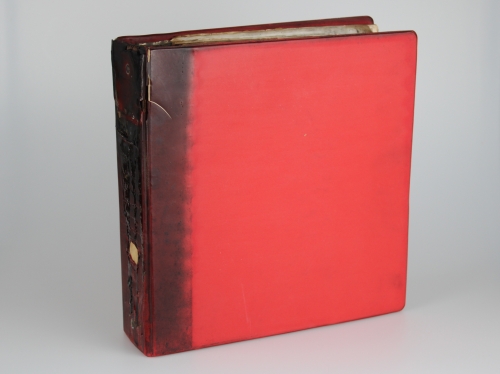
Kathy Dillaber was working in the Army G-1 office for LTG Timothy Maude, whose office was the site of impact for American Airlines Flight 77. After surviving the collision and evacuating the burning building, Kathy learned that her sister Patty, who worked for the Defense Intelligence Agency, had not survived. The burned-out shell of Kathy’s notebook was discovered a year later when workers returned.
Loan, Pentagon Memorial Fund, Gift of Kathy Dillaber